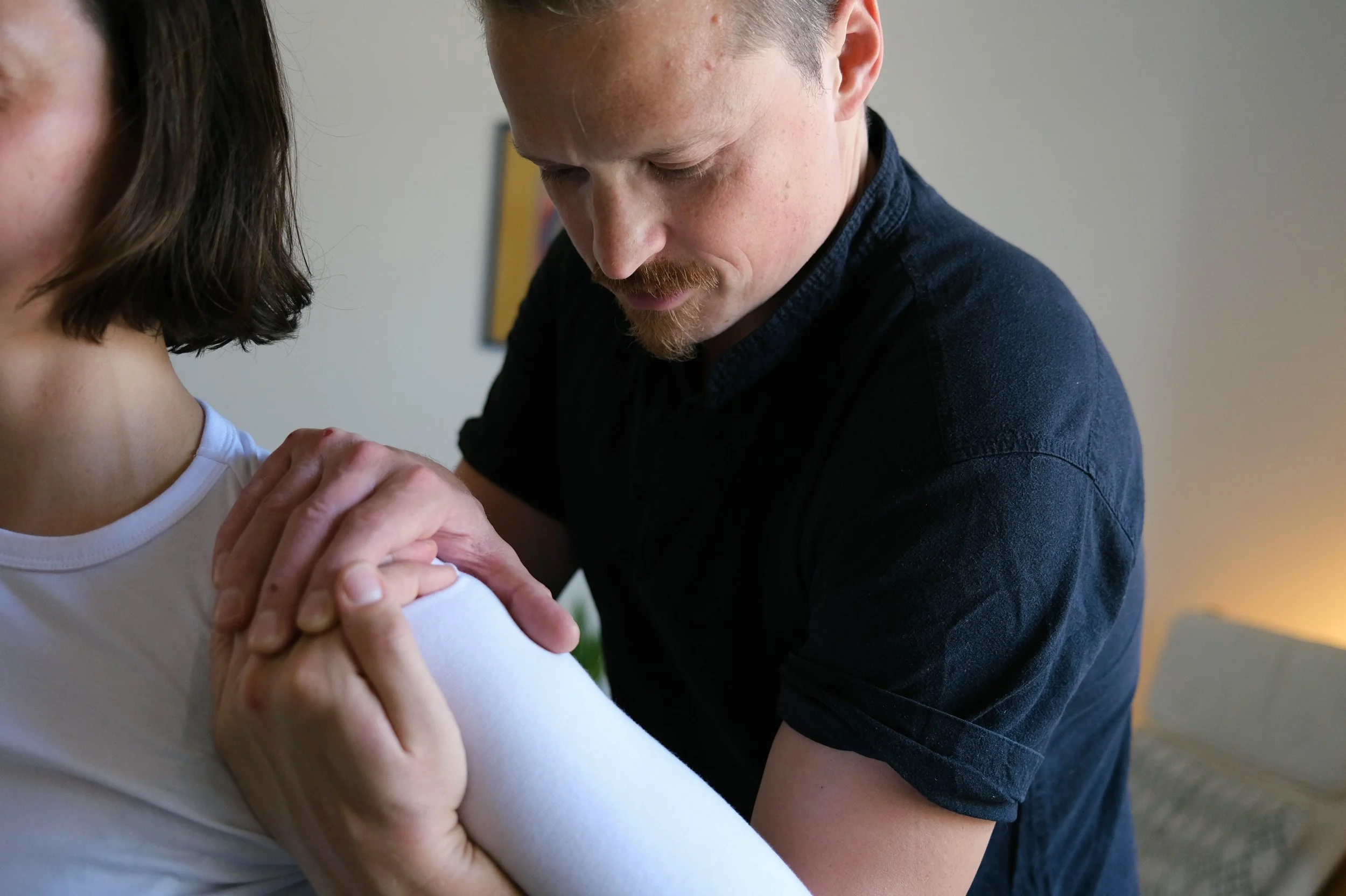
Shoulder Pain Treatment in Totnes
Shoulder pain can make even simple movements frustrating. Reaching overhead, lifting weights, driving, sleeping comfortably, putting on a coat, or carrying shopping can become restricted and painful. Some shoulder problems begin suddenly after an injury or strain, while others build gradually over time through repetitive loading, training patterns, posture, stress, or compensation elsewhere in the body.
At The BodyWorx, osteopathic treatment for shoulder pain begins with understanding why the shoulder has become overloaded in the first place. The shoulder is one of the most mobile and mechanically demanding joints in the body. Healthy movement depends not only on the shoulder joint itself, but also on the neck, ribs, thoracic spine, breathing mechanics, muscular balance, and the way force transfers through the body as a whole.
Common Causes of Shoulder Pain
Osteopaths commonly assess and treat shoulder pain associated with:
• Rotator cuff irritation and strains
• Frozen shoulder
• Shoulder impingement
• Sports and gym injuries
• Tendon overload
• Postural strain and desk-related tension
• Referred pain from the neck or upper back
• AC joint irritation
• Shoulder instability
• Rib and thoracic restriction affecting shoulder movementSometimes the source of shoulder pain is not actually the shoulder itself.
Restriction through the upper back, neck, ribs, or surrounding fascial tissues can alter the way the shoulder moves and loads over time. In other cases, pain around the shoulder may occasionally relate to non-musculoskeletal conditions, which is why proper clinical assessment is important.
A Whole-Body Approach to Shoulder Pain
At The BodyWorx, treatment is not limited to the exact point where symptoms are felt. Osteopathy works from the understanding that the body functions as an interconnected system. A shoulder problem may involve compensation patterns through the spine, rib cage, pelvis, breathing mechanics, or even lower limb movement affecting overall load transfer and movement quality. This wider perspective is especially important in persistent or recurring shoulder pain, where local treatment alone often gives only temporary relief. By improving movement quality, reducing unnecessary tension, and restoring more balanced mechanics through the wider system, treatment aims to support both symptom relief and longer-term resilience.
Osteopathic Treatment for Shoulder Pain
Treatment is tailored to the individual and depends on the nature of the problem, overall health, activity levels, and goals. Osteopathic treatment may include:
• Gentle joint articulation and mobilisation
• Soft tissue and myofascial treatment
• Massage and muscle release techniques
• Rib and thoracic spine treatment
• Movement and mobility work
• Rehabilitation advice and exercises
• Postural and ergonomic guidance
• Breathing and tension regulation approaches
Treatment is designed to work with the body rather than force against it. The aim is not simply to chase symptoms, but to improve the conditions that allow healthier movement and recovery.
Should I See an Osteopath for Shoulder Pain?
If shoulder pain is limiting your work, training, sleep, mobility, or day-to-day life, osteopathy may help identify contributing factors and support recovery. Early assessment can often help prevent minor irritation patterns becoming more persistent and difficult to resolve.
At The BodyWorx in Totnes, osteopathic care is tailored to the individual rather than applying the same approach to every shoulder problem. Whether symptoms relate to sport, work, posture, injury, or longer-term restriction patterns, treatment begins with understanding how your body is functioning as a whole.
Book a Shoulder Pain Assessment
If you are looking for osteopathic treatment for shoulder pain in Totnes or the surrounding South Hams area, you can get in touch through the contact page or book an appointment online.